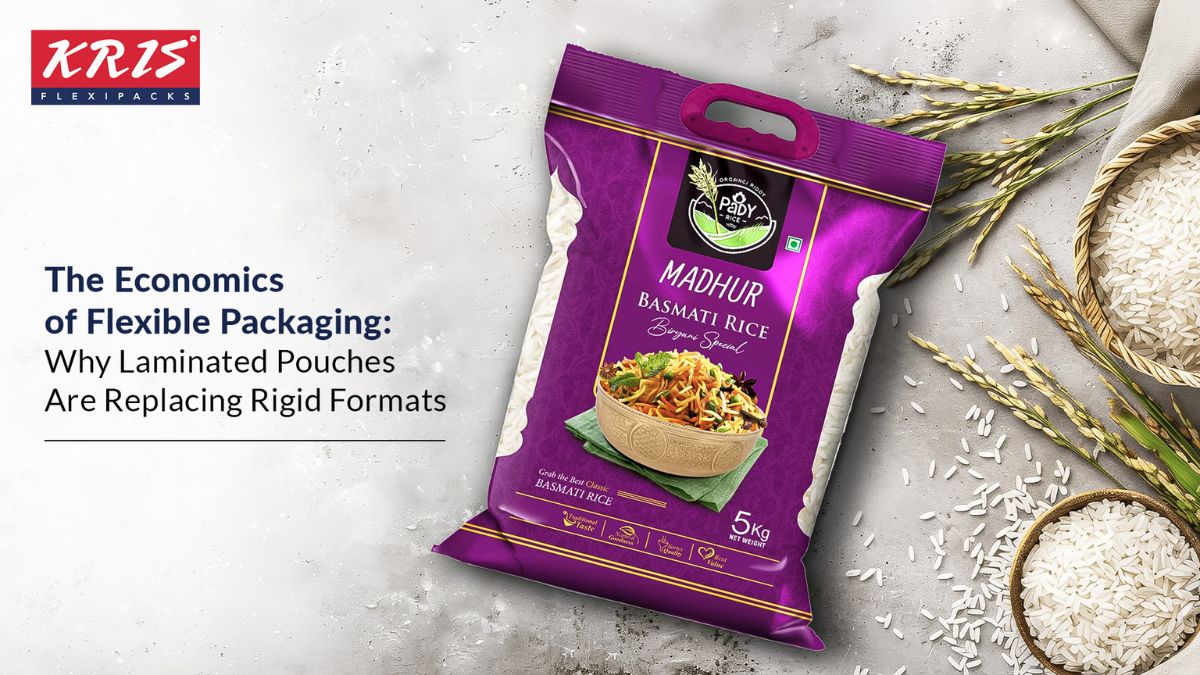
The business case for flexible packaging spent a long time resting almost entirely on cost. Compared to glass, rigid plastic, or metal, laminated pouches and flexible formats were cheaper to produce, lighter to ship, and more efficient to store. That was enough for most procurement conversations, and it drove significant adoption across FMCG, food processing, and personal care over the past two decades.
The cost argument remains valid. But anchoring the case for flexible packaging to cost alone has started to obscure everything else the format has become capable of doing.
The Material and Logistics Foundation
The efficiency advantages of flexible packaging are real and worth stating clearly, because they compound in ways that are not always obvious at the unit level.
According to data published by the Flexographic Technical Association, plastic packaging enables weight savings of more than 78 percent compared to alternative packaging materials, with one truckload of flat pouches equivalent to 15 to 25 truckloads of empty rigid containers. That reduction flows through the entire supply chain: lower raw material consumption, reduced shipment weight, more units per pallet, lower warehousing requirements.
In India specifically, flexible packs captured 54.32 percent of the country’s packaging market in 2024, with converters reporting freight cost reductions of up to 70 percent compared to rigid formats. These are not theoretical benefits. They show up in actual freight invoices and warehouse utilisation figures, which is why flexible packaging has maintained its growth trajectory even during periods of raw material price pressure.
Barrier Performance and Product Integrity
What the cost conversation often overlooks is the technical performance of modern laminated structures. Multi-layer flexible packaging can be engineered to provide precise barrier properties against moisture, oxygen, light, and contaminants, calibrated to the specific requirements of the product inside.
This matters operationally. Extended shelf life reduces spoilage across the supply chain, which is a cost benefit in itself but also a product quality benefit that affects consumer experience at the point of use. A product that reaches the consumer in better condition than a competitor’s product, simply because the packaging was better engineered, is a competitive advantage that rarely gets attributed correctly.
The barrier engineering in modern flexible packaging has become sophisticated enough that it now outperforms many rigid formats in specific protection requirements, not just matches them.
Consumer Interaction Has Changed
There is a consumer dimension to flexible packaging that the industry has not always articulated well. The user experience of a well-designed flexible pack, with a resealable zipper, a clean tear notch, a stable stand-up base, is meaningfully better than most rigid alternatives for everyday use.
Consumers notice this, even if they do not articulate it as a packaging preference. Ease of opening, re-closability, portion control, storage convenience after opening: these are practical interactions that happen every time someone uses the product. Over repeat purchases, they build brand preference in ways that are difficult to measure in isolation but not difficult to observe at a category level.
Packaging that makes the product easier to use is doing something that advertising cannot. It is reinforcing brand preference at the moment of use, not just the moment of purchase. As category expectations have risen, flexible formats with thoughtful functional design have moved from a differentiator to something closer to a baseline requirement in several categories.
Print Quality Closed the Visual Gap
For a long time, flexible packaging carried a visual disadvantage relative to premium rigid formats. Glass and rigid plastic had a physical presence and a print quality that pouches and flexible packs could not reliably match.
Advances in flexographic and gravure printing have changed that. Current flexible packaging supports the kind of graphic quality, colour accuracy, and finish variety that brand and design teams previously associated only with rigid formats. The visual gap has effectively closed for most practical applications, which means brands no longer need to choose between the functional efficiency of flexible formats and the visual presentation standards their categories demand.
The Recyclability Question
Flexible packaging’s sustainability profile is genuinely complicated, and the industry does not serve itself by being evasive about it. Multi-layer laminate structures that deliver strong barriers and functional performance are difficult to recycle through conventional streams. That is a real challenge, and consumer and regulatory pressure around it is increasing.
Progress is being made through mono-material flexible structures, chemical recycling pathways, and design-for-recycling approaches. In India, the transition toward mono-material PE and PP laminates is already gaining traction as manufacturers work to
comply with plastic waste management regulations. But brands making packaging decisions today are operating ahead of when those solutions will be widely available at scale.
The honest position is that flexible packaging’s environmental footprint involves trade-offs: lower material use and transport emissions on one side, recyclability limitations on the other. Brands should be making those trade-offs consciously, with clear visibility of where material technology is heading. Kris Flexipacks builds that conversation into its development process because decisions made now will need to hold up against requirements that will look considerably different in five years.
Beyond the Cost Conversation
The brands that are getting the most from flexible packaging are not the ones that chose it primarily because it was cheaper. They are the ones that understood what the format could do across barrier performance, consumer experience, visual presentation, and logistics efficiency, and built their packaging strategy around that fuller picture.
Cost will always be part of the evaluation. But treating it as the primary frame means consistently underinvesting in what flexible packaging is actually capable of delivering. The format has earned a more complete conversation than it typically gets.

By Shailesh Sheth – Chairman & Managing Director, Kris Flexipacks