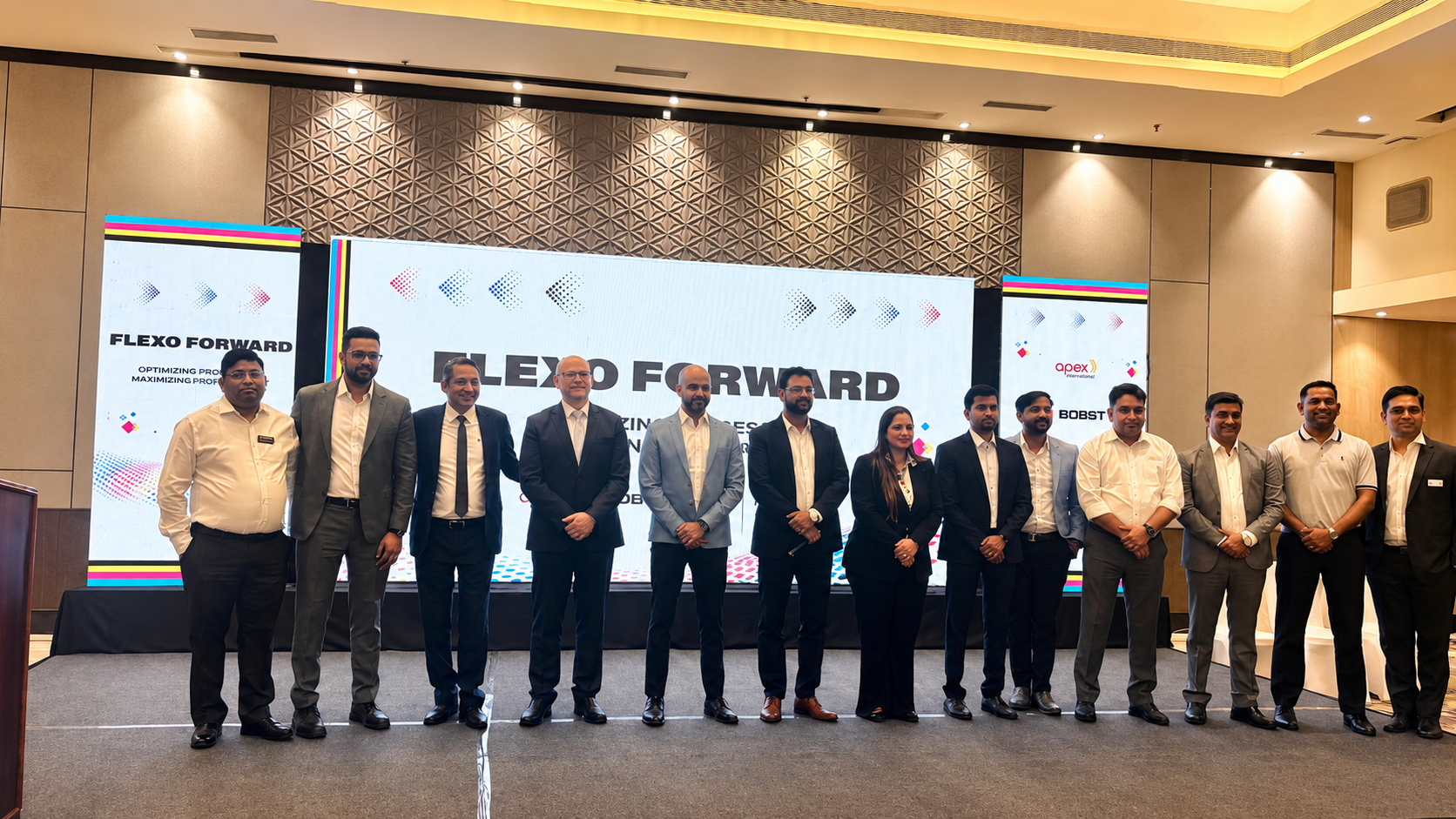
Ahmedabad, June 5, 2026: The packaging and converting industry gathered in large numbers at Crowne Plaza, Ahmedabad, for Flexo Forward – Optimizing Processes and Maximizing Profitability, an event that brought together more than 200 package printers, converters, brand representatives, and technology providers. Organized in association with leading industry partners BOBST, Miraclon, Apex International, and Polymount, the event served as a platform for knowledge sharing and technical advancement. The program focused on helping converters navigate today’s demanding production environment through automation, process standardization, sustainability initiatives, and operational excellence, while showcasing innovative solutions from some of the flexographic industry’s most respected technology leaders.
With increasing pressure on converters to reduce waste, improve turnaround times, deliver higher print quality and meet sustainability goals, the event explored practical solutions that can help businesses improve competitiveness while strengthening profitability.
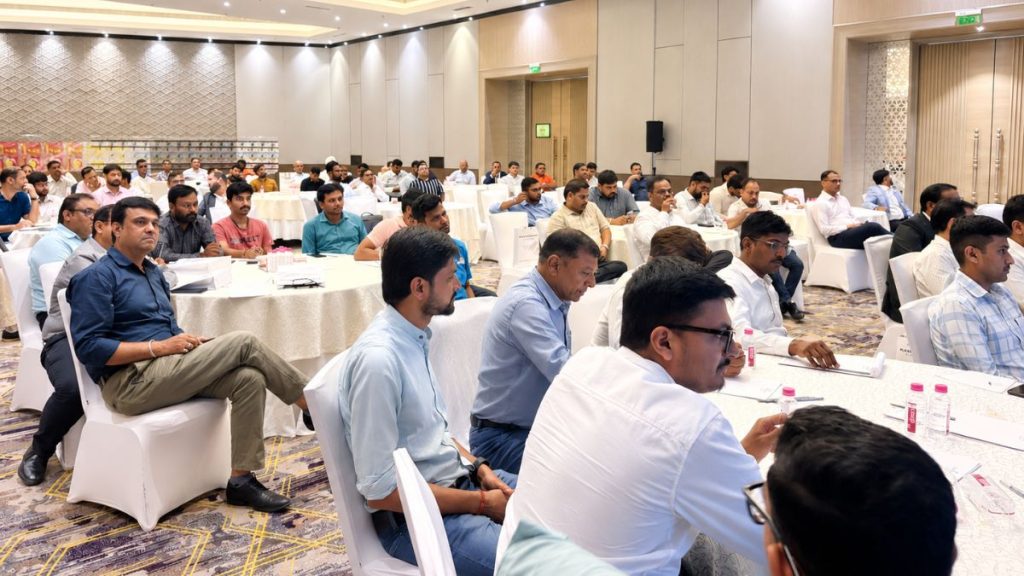
The day’s presentations highlighted a common message: the future of flexography lies not in isolated technological upgrades but in creating integrated, data-driven and standardized production environments where every component—from press technology and plates to anilox rolls and mounting systems—works together to deliver predictable, repeatable results.
Driving Performance Through Connectivity and OEE
The technical program opened with a presentation by Rainer Rosenbusch, Product Management and Business Development, BOBST, who spoke on shaping the future of the packaging world through digitalization, automation and improved Overall Equipment Effectiveness (OEE).
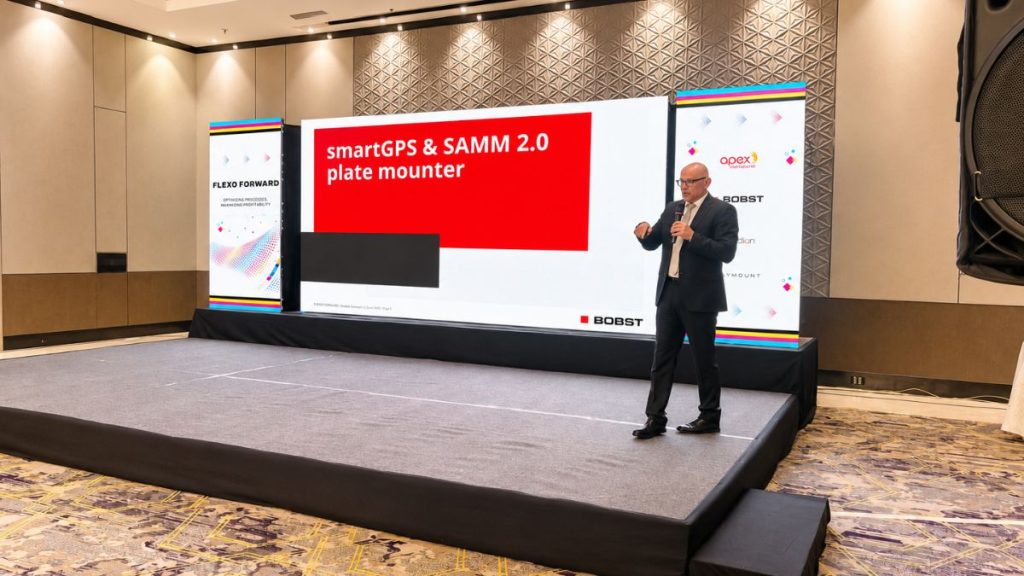
Introducing BOBST’s vision of connected production, Rosenbusch emphasized the growing importance of data in manufacturing.
“When you want to improve, you have to measure,” he said.
According to Rosenbusch, modern production equipment generates vast amounts of operational data, but many converters are still not fully utilizing this information to improve productivity and profitability.
He explained how BOBST Connect enables machines to exchange information, allowing converters to monitor performance, identify bottlenecks and make informed operational decisions. The platform is designed not only for BOBST equipment but also for integration with other production systems across the converting workflow.
“We strongly believe in connectivity,” Rosenbusch noted, explaining that digitalization allows machines to communicate more effectively while helping manufacturers create a more sustainable production environment.
The presentation also explored BOBST’s range of CI flexo presses, including the Vision CI, Expert CI and Master CI series. Rosenbusch highlighted how automation technologies such as automatic impression setting, register control and smart setup systems help reduce waste while improving consistency.
A major focus of his presentation was the role of sustainability in flexographic printing.
Comparing flexography with gravure printing, Rosenbusch outlined several advantages, particularly in terms of reduced ink and solvent consumption.
“Every day there are savings when you are printing in flexo versus gravure,” he explained.
He further pointed out that closed-chamber ink systems significantly reduce solvent evaporation compared with traditional gravure systems, creating both environmental and economic benefits.
Another key message was the importance of reducing waste during job setup and changeovers. Through automation and intelligent workflow systems, converters can achieve faster startups, shorter make-ready times and more stable production conditions.
Rosenbusch concluded by emphasizing that improving OEE requires continuous measurement, analysis and optimization of every aspect of production.
Modern Flexography and the Sustainability Challenge
The next presentation was delivered by Hrishikesh Kulkarni, Regional Sales Manager – West and South India and Sri Lanka, Miraclon, who discussed how modern plate technologies are enabling both sustainability and operational efficiency.
Kulkarni began by highlighting how far flexography has evolved over the past decade. While machinery, inks, tapes and workflow systems have improved dramatically, he challenged converters to examine whether their production practices have evolved at the same pace.
He argued that one of the industry’s biggest challenges remains excessive process complexity and dependence on operator intervention.
“Complexity means loss,” Kulkarni stated.
According to him, many converters unknowingly accept inefficiencies as part of normal operations, including excessive troubleshooting, inconsistent setup practices and process variability.
The result is hidden costs that often go unmeasured.
“The loss never gets calculated,” he remarked, explaining that many production inefficiencies are absorbed into daily operations without being fully understood.
Kulkarni stressed that sustainable production begins with standardization. Rather than relying on individual operator experience to solve problems on the press, converters should build systems that deliver predictable and repeatable outcomes.
Several case studies were presented to demonstrate how modern flexography can successfully replace gravure while maintaining print quality and significantly reducing environmental impact.
One particularly notable example involved a flexible packaging application converted from gravure to water-based flexographic printing on a recyclable film structure.
The project achieved substantial reductions in substrate consumption and overall material usage while maintaining brand requirements.
“Don’t look at quality—quality is given. Look at how better they have become and what different they have done to make flexo better,” Kulkarni said while discussing successful implementation projects.
The presentation also highlighted the growing adoption of Extended Color Gamut (ECG) printing as a means of reducing spot colors, simplifying workflows and improving production efficiency.
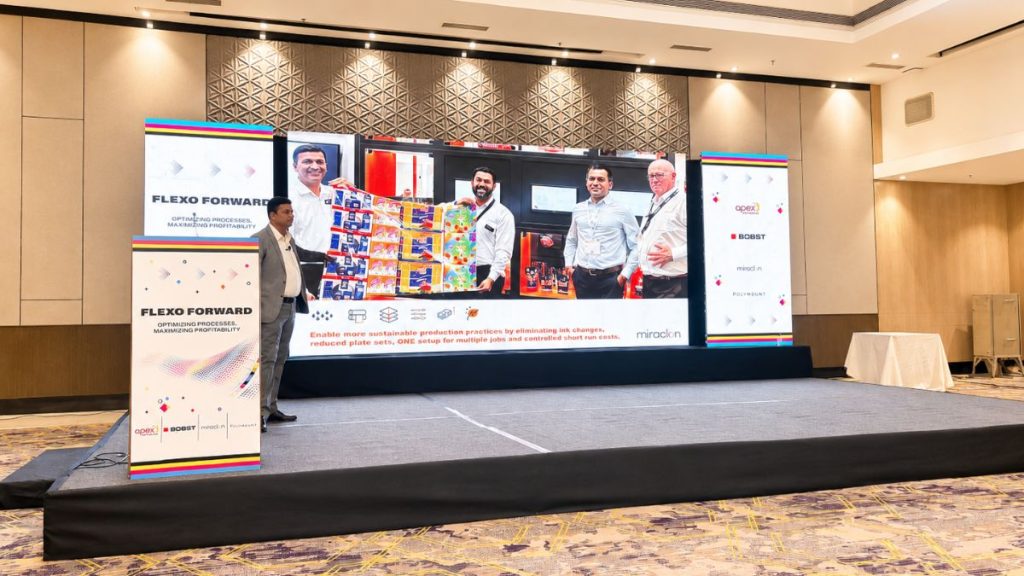
Kulkarni cited examples where converters achieved significant operational advantages by standardizing color reproduction and reducing dependency on frequent ink changes.
Discussing sustainability from a broader perspective, he argued that the conversation should extend beyond recyclable substrates alone.
“Efficiency and sustainability become natural outcomes,” he explained.
According to Kulkarni, reductions in make-ready waste, ink consumption, substrate usage and machine downtime often deliver greater environmental benefits than focusing solely on material selection.
He further emphasized the need for stronger collaboration among technology providers, converters and brand owners.
“Change requires partnership. Change requires collaboration,” he said.
The presentation concluded with a call for the industry to rethink traditional production approaches and embrace a more systematic, process-driven model for flexographic manufacturing.
Unlocking Efficiency Through Effective Anilox Management
The focus then shifted to one of the most critical yet often overlooked components of flexographic printing—the anilox roll.
Mahesh Mense, Sales Manager – Indian Peninsula, Apex International, delivered a comprehensive presentation on how anilox optimization can significantly influence print quality, consistency and profitability.
Mense described the modern flexographic process as a highly interconnected system where every variable impacts final output.
“One of the most critical challenges in flexo is maintaining consistent ink transfer,” he explained.
He noted that many converters struggle with large and complex anilox inventories, multiple ink systems and varying production requirements. These factors often increase setup times, generate additional waste and complicate standardization efforts.
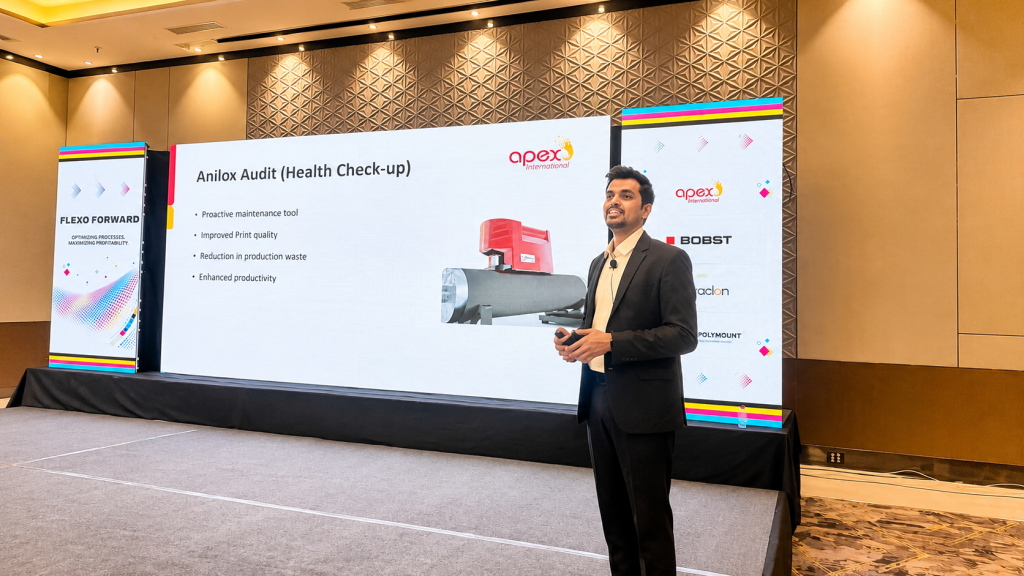
According to Mense, the industry’s ultimate objective remains clear:
“Reduce waste, increase productivity, reduce changeover time and improve quality.”
Achieving these goals requires a strategic approach to anilox management.
He outlined five key pillars:
- Standardized anilox inventories
- Advanced engraving technologies
- Effective cleaning and maintenance
- Proper storage practices
- Regular auditing and performance monitoring
A significant portion of the presentation focused on how advanced engraving technologies can simplify operations by reducing the number of anilox rolls required for diverse applications.
Mense presented examples showing how modern engraving solutions can cover a wider range of printing requirements while maintaining consistent ink transfer.
He emphasized that anilox management should not be viewed merely as a maintenance function.
“Anilox auditing should be part of process optimization,” he stated.
Regular audits allow converters to identify wear, contamination and performance degradation before they begin affecting print quality and productivity.
Mense also highlighted the financial impact of process simplification. Reduced inventory requirements, fewer changeovers and improved consistency translate directly into lower operational costs and higher profitability.
One of the key takeaways from his presentation was that profitability is increasingly determined by process control rather than machine speed alone.
“Profitability today is driven by process control, standardization and intelligent ink transfer,” he concluded.
Rethinking Plate Mounting and Process Optimization
The final technical presentation was delivered by Tarak Trifaley of Polymount, who explored how improvements in mounting technology can contribute significantly to overall process efficiency.
Trifaley argued that while presses, plates and inks have undergone major technological evolution, plate mounting methods have remained largely unchanged for decades.
This, he suggested, creates hidden inefficiencies that many converters fail to recognize.
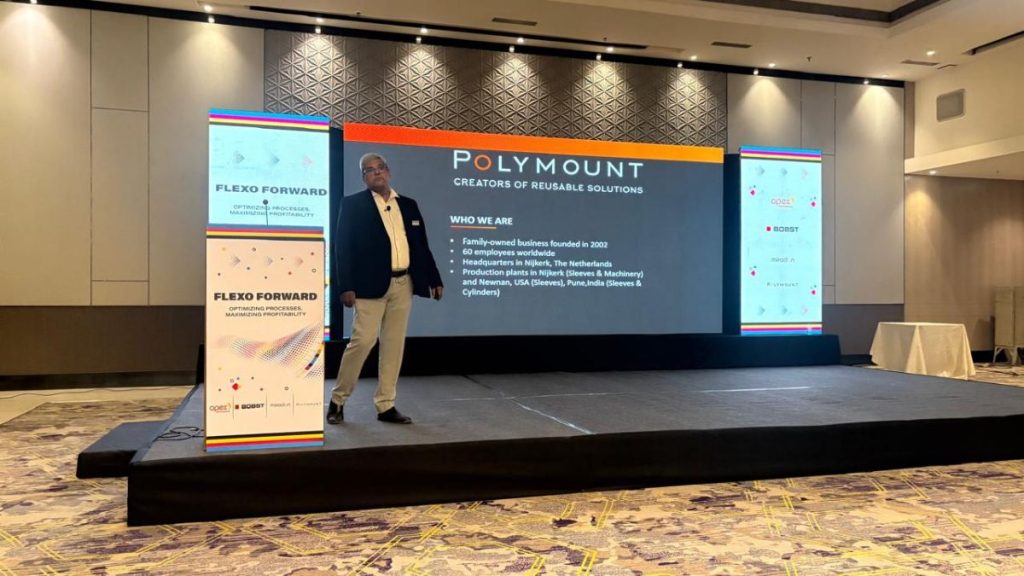
“A single mistake at the mounting station can amplify in printing,” he explained.
Traditional mounting tape systems can introduce variables such as air entrapment, thickness variation and inconsistent cushioning, all of which affect print performance.
Polymount’s self-adhesive sleeve technology aims to eliminate these variables while reducing waste and simplifying workflows.
According to Trifaley, mounting optimization offers benefits that extend far beyond print quality.
Faster setup times, reduced tape usage, improved repeatability and lower waste all contribute directly to improved profitability.
“Efficiency plus consistency translates into profitability,” he said.
The presentation included examples showing reductions in startup waste, shorter cleaning times and improved registration accuracy.
Automated plate cleaning technologies were also discussed as a means of extending plate life and reducing damage associated with manual cleaning processes.
Trifaley emphasized that sustainability benefits often emerge naturally from operational improvements.
Reduced tape consumption, lower chemical usage and fewer replacement plates create measurable environmental advantages while simultaneously lowering costs.
“We designed this technology to save money, but today it also supports sustainability,” he noted.
A Unified Industry Message
While the speakers represented different segments of the flexographic ecosystem, their presentations reinforced several common themes.
First, operational excellence begins with standardization. Whether discussing machine settings, color management, plate technologies, anilox specifications or mounting systems, every speaker emphasized the importance of reducing variability.
Second, data and measurement are becoming increasingly central to competitiveness. Converters can only improve what they accurately measure and analyze.
Third, sustainability and profitability are no longer separate objectives. The reduction of waste, energy consumption, make-ready times and material usage benefits both environmental performance and financial results.
Finally, collaboration remains essential. Technology providers, converters and brand owners must work together to accelerate the adoption of modern flexographic practices.
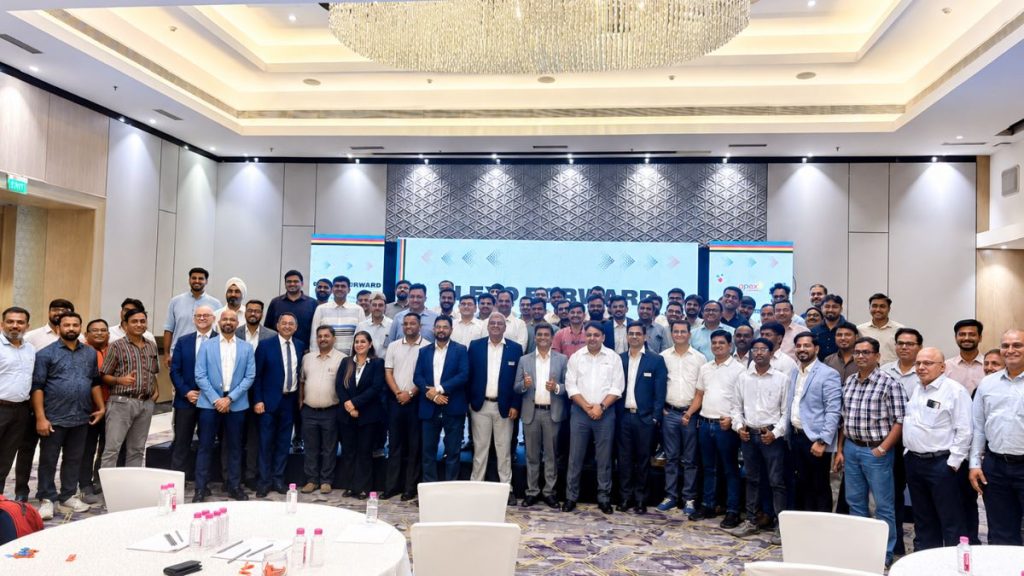
As packaging requirements continue to evolve, Flexo Forward 2026 demonstrated that the industry possesses both the technology and expertise needed to meet future challenges. The event provided attendees with practical strategies, proven case studies and valuable insights into how modern flexography can deliver higher productivity, greater sustainability and stronger profitability.
For the more than 200 professionals who attended, the message was clear: the future of flexographic printing belongs to those who embrace measurement, standardization, automation and continuous improvement.