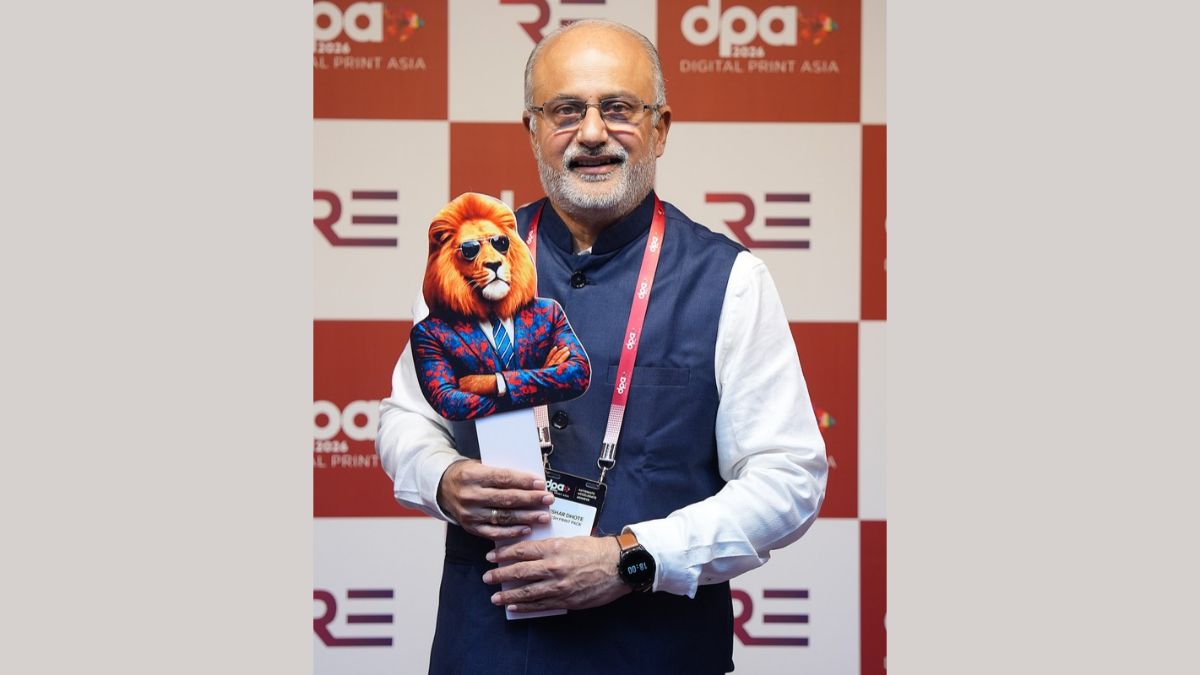
In the aftermath of Digital Print Asia (DPA) 2.0, organised by ReEnvision Events Private Limited at Hilton Bengaluru Embassy Manyata Business Park, Mr. Tushar Dhote, Curator of DPA, discussed the emerging trends and technologies transforming the digital printing landscape, the new business opportunities being presented, and his vision as the newly appointed President of the All India Federation of Master Printers (AIFMP). He is also the present Chairman of PAMEX.
Tell us about your role as the new President of AIFMP.
Moving beyond traditional industry representation, I strongly believe that AIFMP must evolve as a collective voice of the industry, a knowledge-sharing platform, a networking hub, and a catalyst for business growth. My endeavour is to ensure that every member of the federation becomes better connected, more productive, and more profitable.
Coming to DPA 2.0, how was your experience as Curator of the two-day digital printing summit?
As Curator, my vision for DPA 2.0 extended well beyond product presentations and conventional industry discussions. The second edition was designed not merely as an industry event but as a forum where printers, converters, publishers, technology providers, and brand owners could openly discuss what is working, what needs to change, and where the real opportunities lie.
Did the sessions and interactions at DPA 2.0 meet your expectations?
Absolutely. Every session and interaction at DPA 2.0 brought forward ideas that challenged conventional thinking, along with practical insights to help businesses move to the next level. I extend my sincere appreciation to all the speakers, partners, and supporting associations whose contributions made the summit not only successful but also productive.
DPA focuses on the prospects and possibilities of digital printing. What is your perspective on this technology?
Digital printing is gaining ground on multiple fronts, both as a standalone technology and as a complement to offset, flexography, and gravure. The future of print will not be shaped by any single technology. Instead, it will depend on the effective integration of different technologies and the selection of appropriate equipment based on print volumes and application requirements.
DPA explores how effectively we understand and adopt digital printing, translate its capabilities into meaningful business value, and leverage it alongside traditional printing technologies.
What is the most significant advantage digital printing has brought to the industry?
For decades, the industry has primarily focused on machines, production costs, material consumption, and selling prices as key business metrics. However, the printing business has changed dramatically. Customers now expect greater speed, flexibility, personalisation, value addition, and sustainability. They want their print partners to contribute to their business objectives rather than merely supply printed materials.
This is where digital printing comes into its own. It enables printers to respond more effectively to evolving customer expectations and explore opportunities that go beyond conventional production models. The real advantage lies in how printers use the technology to create value for their customers while building sustainable and profitable businesses.
What is your piece of advice to printers who have not yet adopted digital printing?
Digital printing has become one of the key benchmarks in today’s printing industry. Printers who continue to rely on yesterday’s benchmarks to manage today’s businesses risk missing emerging opportunities. However, the key consideration is not simply what machines can print or produce, but how effectively they meet customer needs while generating profits.
Operating a high-speed machine does not necessarily guarantee profitability. Success depends on an entire ecosystem encompassing machine turnaround times, downtime, quality, rework, errors, waste, and customer satisfaction. The bigger opportunities often lie not within the machines themselves but in the efficiency of the overall production process.
My advice is simple: do not invest in technology merely because you believe the market might need it. First, understand what your customers are actually looking for, and then identify the technology that can meet those needs profitably.