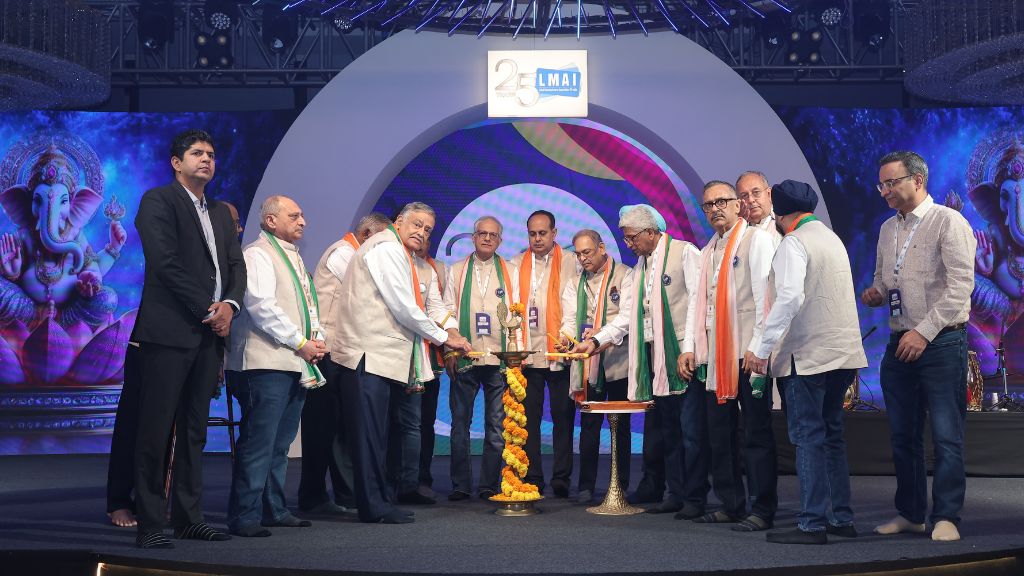
The seventh edition of the LMAI conference 2025 took place from July 3 to 6, marking a significant milestone with its theme, “Emerging Beyond Boundaries.” The event was inaugurated at the Fairmont in Udaipur, where committee members lit a lamp to celebrate the occasion. This year, LMAI commemorated 25 years since its inception, providing valuable insights and networking opportunities for over 700 delegates who attended the conference. Hosted at the stunning Fairmont Palace, the event showcased the beauty of Udaipur while fostering discussions on the latest trends and innovations in the label manufacturing industry.
 The three-night, four-day event, recognized as perhaps the biggest
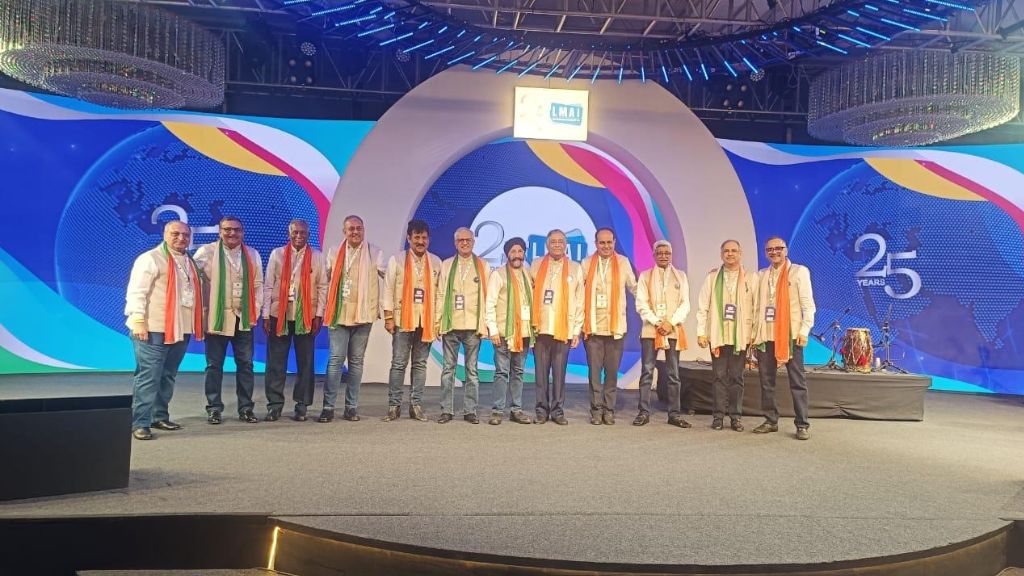
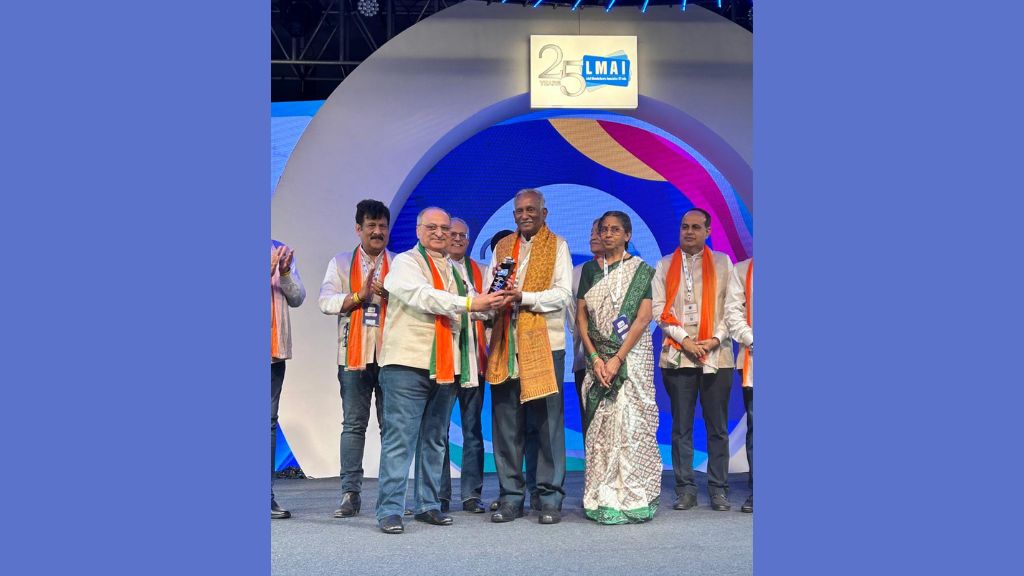
 label event in the world, commenced at 6 PM on July 3, 2025. The inaugural evening embraced a patriotic theme, with the board of directors adorning Modi jackets and tricolor stoles. The welcome note was delivered by LMAI President Rajesh Chadha, setting a celebratory tone for the gathering. Conference agenda details were presented by the two chairmen, Manish Desai and Jaideep Singh, guiding attendees through the planned events. A significant highlight of the evening was the conferral of the fourth LMAI Lifetime Contribution Award to Raveendran Selvarajan, Managing Director of Seljegat Printers Pvt. Ltd., honoring his invaluable contributions to the industry.
The second day commenced with an insightful presentation by Stephane Royere, Head of Business Area Packaging and Print, International Sales and Marketing at Kurz India. Following this, Jitesh Mehta, Senior Director at LPM Avery Dennison India, shared valuable perspectives, adding depth to the discussions and showcasing the latest advancements in their respective fields.
Heidelberg Gallus has unveiled innovative solutions that are set to transform the digital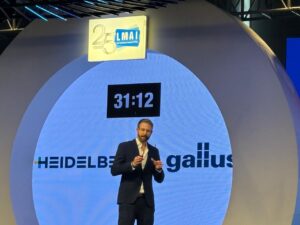 inkjet label printing landscape. According to Thomas Schweizer, Global Head of Sales, “Hybrid is the future, and everything is possible with Hybrid technology.” One notable advancement is the Gallus MatteJet technology, which allows for high-quality matte finishes without the necessity of additional inks or varnishes, streamlining the printing process. Additionally, the newly developed advanced Gallus Screen Printing unit can be seamlessly integrated with any narrow web equipment, offering versatility and enhancing production capabilities.
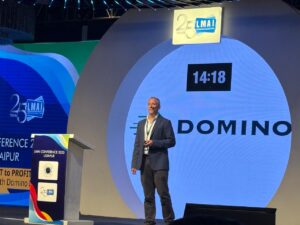 Mark Herrtage, CFO of digital printing and Asia business development at Domino Printing Sciences, highlighted the significant advantages of digital printing by stating, “Digital reduces setup waste by 20% or more. No plates, no makeready — just profit-ready labels.” With over 350 installations globally, Domino’s N610i has established itself as a leader in India’s mid-tier label segment, garnering the nickname “the money-making machine.” Herrtage emphasized the efficiency of digital printing, noting that it enables the creation of over 20 label variants per day without any downtime. He concluded by asserting, “This isn’t future tech. It’s solving today’s SKU chaos,” underscoring the immediate benefits of adopting digital solutions in today’s fast-paced market.
Manjusha Singh, CEO of Siegwerk India, emphasized the company’s commitment to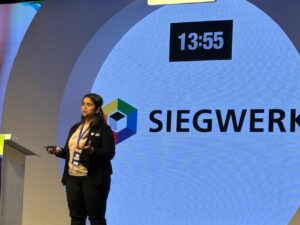 transformation and safety in their operations. She highlighted the meticulous process of tracing every ink batch back to its raw materials, operators, and test reports, showcasing Siegwerk’s dedication to quality and transparency. Notably, Siegwerk India has achieved an impressive milestone of 1,000 days with zero lost-time incidents, underscoring that safety is not merely a checklist, but a fundamental part of the company culture. Furthermore, Siegwerk’s innovative sustainable inks are paving the way for label de-inking in Indian recycling lines, demonstrating their focus on practical solutions rather than seeking accolades. Singh articulated this commitment by stating, “We’re designing for recyclers, not awards,” reflecting the company’s forward-thinking approach in the industry.
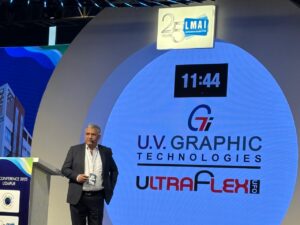 Abhay Datta, managing director of UV Graphic Technologies, recently highlighted the company’s commitment to innovation in the printing industry. “We don’t just build presses, we engineer ecosystems,” he stated, showcasing the advanced capabilities of the UltraFlex AI flexo series, which has successfully positioned Noida on the global flexo map. Featuring impressive advancements such as first-pass register, AI plate counters, and rapid 30-second curing swaps, UV Graphic’s machines are setting a new standard that outpaces many European competitors. With over 160 presses sold and 4,000 LED-UV systems installed, alongside notable exports to Europe, UV Graphic is proving that Indian flexo technology is not merely keeping pace with global trends, but is, in fact, leading the way.
Ankit Madan, senior manager of product life cycle management for industrial printers at Konica Minolta Business Solutions India, emphasized that digital label printing has transitioned from being a future trend to becoming a crucial component of Tier 3 India’s startup engine. He highlighted the new formula for success in this space: simplicity, speed, and service. An example he provided was a remarkable transformation where a water brand’s 20-bottle order escalated to 16 million units, showcasing the impact of customization at scale. With Konica Minolta’s digital presses, there are no special media or pre-coating requirements, allowing for a plug-and-play model that ensures success in short-run label production. Features such as variable data printing, white opacity, and click-based models demonstrate how digital label presses are meeting the industry’s evolving needs effectively.
Hardik Patel, the national sales head at Toppan Speciality Films, emphasized the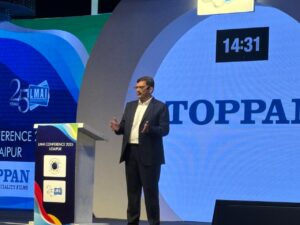 importance of evolving packaging standards beyond mere recyclability. He asserted that today’s packaging must not only be certifiably recyclable but also capable of performing under pressure and contributing to reduced carbon emissions. Toppan’s innovative mono-material films provide an effective solution, mimicking the strength of traditional PET and foil combinations while ensuring they do not end up in landfills. These high-barrier, clear films are fully recyclable, aligning with India’s emerging Extended Producer Responsibility (EPR) laws that are prompting significant changes in packaging practices. Patel highlighted that converters who simplify their packaging structures and embrace circular design principles will cultivate brand trust. He also noted the significance of collaboration during the design phase, stating that when converters are involved from the outset, key aspects like recyclability, printability, and compliance can be seamlessly integrated.
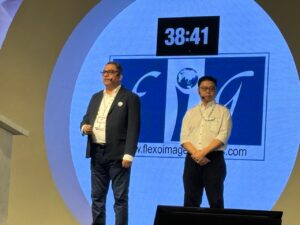 A presentation by Gourav Roy of FIG, alongside Florian Stroe from Mark Andy and Krisyanto Ekokurniawan from Luster, key insights were shared regarding the evolving needs of India’s label printing industry. Gourav Roy emphasized that “India’s label printers don’t need machines—they need ecosystems,” highlighting FIG’s unique capability to integrate global technologies for seamless press-to-pack solutions. Florian Stroe added that Mark Andy’s inline digital hybrids combine printing, converting, and embellishing processes into a single-pass operation, catering to the growing demand for speed and efficiency among Indian converters. Additionally, Krisyanto Ekokurniawan discussed how Luster’s AI-powered inspection tools are facilitating zero-defect dispatches, underscoring that for sectors like pharma and exports, precision is not merely beneficial but essential.
Natasha Jaychandra, the director at Veepee Graphic Solutions, delivered her third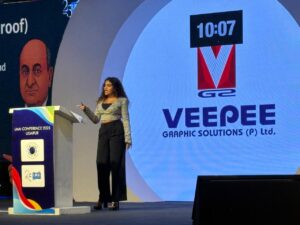 career presentation at the LMAI conference, focusing on the innovative concept of Extended Color Gamut (ECG). She emphasized that ECG is not merely about enhancing colors; instead, it represents a comprehensive strategy aimed at reducing ink waste, ensuring consistent quality, and improving press efficiency. With 90% Pantone coverage and a Delta E of less than 2, ECG effectively bridges the gap between creative aspirations and real-world production capabilities—without the need for spot inks. Jaychandra highlighted that ECG facilitates faster changeovers, minimizes wash-ups, and utilizes fixed ink sets, thereby making it a significant step toward sustainability while also elevating color quality.
Pannel Discurssion
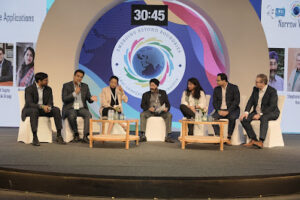 Day three of the LMAI Conference 2025 commenced with an insightful panel discussion focused on the theme of “Narrow Web Label Converting Expanding to Diverse Applications.” This session, expertly moderated by Harveer Sahni, chairman of Weldon Celloplast, featured a distinguished lineup of panelists including Mehzabin Nair, managing director of Skanem India; Priyata Raghavan, deputy CEO of Sai Packaging; Ankit Gupta from Holostik; Denver Annunciation, director of strategic initiatives at Janus International; Hemant Paruchuri, director of Pragati Pack (India); and Stephene Royere, head of business area packaging and printing international sales and marketing at Kurz India. The discussion provided valuable insights into the latest trends and innovations in the narrow web label converting industry, showcasing the sector’s expansion into a variety of applications.
The label industry is undergoing significant evolution, pushing boundaries and adapting to new technologies and market demands. A notable transformation has been the shift from traditional wet glue labels to self-adhesive labels, which now account for over 50% of all labels produced in India. This change has largely been facilitated by narrow web label presses, which have also expanded the capabilities of label converting. To explore the impact of this expansion and the various modalities involved, a panel discussion was held on the third day of the event, titled “Narrow Web Label Converting Expanding to Diverse Applications.” Moderated by Harveer Sahni, the discussion featured insights from prominent Indian printers, highlighting the diverse applications emerging from this evolving landscape.
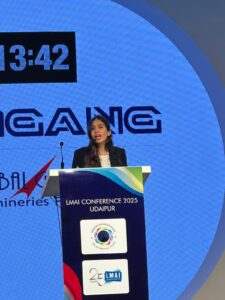
The recent panel discussion was a notable event, characterized by engaging dialogue and insightful perspectives. Following the panel, there was a particularly interesting presentation by the young daughter of Amit Sheth, the founder of LMAI. Her confident delivery and unique insights about Weigang captured the audience’s attention and underscored the potential of the next generation in contributing to the industry.